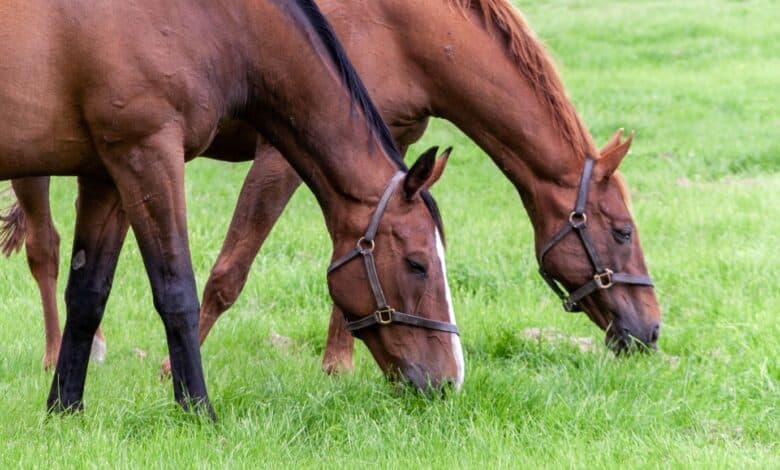
In flat racing, victory is rarely just about training and tactics—it’s just as much about what runs in a horse’s blood. Breeding plays a pivotal role in shaping the modern thoroughbred, influencing everything from speed and stamina to temperament and soundness.
For punters analysing form or scanning horse racing odds, understanding a horse’s pedigree can offer invaluable insight. That’s why platforms like www.virginbet.com have become go-to destinations for fans who want to pair racing knowledge with betting expertise.
Here’s how breeding continues to shape the flat racing landscape.





The blueprint for success
Breeding is the strategic art of pairing stallions and mares to produce offspring that ideally inherit the best traits of both.
For flat racing, the goal is to create horses that are fast, durable, and able to compete at the highest level from as early as two years old.
Breeders study bloodlines in-depth, assessing conformation, race records, progeny results, and genetic compatibility to predict the potential of a future champion.
Speed vs stamina: Tailoring the pedigree
Flat racing features a wide range of distances—from five-furlong sprints to mile-and-a-half classics—so breeding is often tailored to specific objectives.
A sire like Dark Angel, known for producing precocious sprinters, is favoured for shorter distances. On the other hand, Galileo and his sons, like Australia and Frankel, have excelled in producing middle-distance and staying types.
The right genetic match can be the difference between a handicap-level runner and a Group 1 superstar.
Influential bloodlines in modern racing
The dominance of certain stallions has reshaped the flat racing world. Galileo, for example, not only won the Derby in 2001 but became a super-sire with multiple Classic winners among his progeny.
Dubawi, Sea The Stars, and Kingman have also established themselves as elite stallions whose offspring consistently perform at the highest level.
These names are now common across racecards in Europe’s top races, often influencing betting markets before a horse even sets foot on the track.
Broadmares: The unsung heroines
While stallions often get the headlines, top-class broodmares are equally vital. Mares like Ouija Board (dam of Derby winner Australia) and Urban Sea (dam of both Sea The Stars and Galileo) have made enormous contributions to the sport.
Rather raced or unraced, a strong maternal line enhances a pedigree’s value, especially when combined with a proven sire.
The commercial aspect
Breeding isn’t just a passion—it’s big business. Yearlings from blue-blooded families often command six- or even seven-figure prices at auction. Stallion fees can range from modest sums to over £200,000 for access to elite sires.
Owners and investors rely on pedigrees not just for performance potential, but for resale and breeding value down the line.
Breeding is the cornerstone of flat racing success. Every major winner, from juvenile sprints to Classic glories, carries a lineage shaped by decades of strategic decision-making.
For those serious about reading beyond the formbook—whether placing bets or planning matings—pedigree analysis remains one of the most powerful tools in the sport.