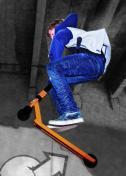
Freestyle scootering is one of the fastest growing new action sports across the globe today and the market is still growing, with an increasing number of users moving to the freestyle scooter not just for the skate park but also the street.
Hy-Pro’s scooter brand Zinc now sells an impressive 500,000 scooters per year at an average RRP of £100 – quite an achievement for a fledgling brand. “In terms of market size, scooters are worth around £60 million in the UK and growing,” says Hy-Pro senior category and brand manager Ying To. “Zinc as a brand is very much part of this market, with our share growing by over 60 per cent year on year.”
Not just a fad
Scooters have been around for a relatively long time in terms of being a piece of leisure equipment, with some of the earliest patents dating back to the 1920s. While the basic design of a frame with two wheels hasn’t changed much, today’s scooters are far lighter, stronger and more compact than any of their predecessors, allowing riders to perform incredible acrobatic feats as well as being a fun and cheap (and cool) way to get around.
“The design of the scooter in principle is pretty simple, but the developments that have been made to enhance rider safety and performance are amazing,” says Ying To. “Performance components are built into every aspect of a freestyle scooter – from the materials used in manufacture to the cutting edge design of enhanced parts to improve rider experience and performance.





“It’s difficult to define a moment that triggered the growth in the use of scooters as an extreme sport, but the craze shows no sign of ending any time soon. Ever since the late nineties and early noughties, freestyle scooters have hit massive peaks in sales. Just like all fads, scooters came and went, but not everyone quit for the next big thing.
“People kept on riding their scooters either for the sheer fun of it or just because they wanted to take part in something brand new and revolutionary. Whatever their reasons, there is no doubt these early riders were responsible for pushing the limits of this sport through its infancy and building the foundation for what is to come.”
Zinc was born out of a passion for outdoor sport and, specifically, mobility products. Ying To explains: “Our methodology was not to produce cheap disposable product to attract short term sales, but to build a range with true value and compelling reasons to buy. We started the process two years ago with a veteran team of designers and industry maestros who truly believed in our goal – and here we are two years later with an enviable reputation and a truly international business with a British home.”
One retailer reaping the rewards of the scooter’s popularity is Slick Willies, one of the longest established skate shops in London. “I would say extreme scootering is bigger than BMXing and skateboarding right now,” says store manager Rudy. “Any kid can pick up a scooter and start riding and it appeals to all ages from five upwards. The market is still growing.”
Interestingly, the way Slick Willies drives sales is mainly through blogging and using social networking sites such as Facebook and Twitter, with today’s widespread use of the internet allowing retailers to more easily stay in touch with the local community.
Rough terrain
Although some people still see the skate park as the true home of the freestyle scooter, more and more scooters are used in the street or other flatland areas. Kick scooters, due to their construction, can be used on most structures, including rails, boxes and even vertical ramps. Accordingly, there are an increasing number of events in the UK for scooter riders, with scootering being an accessible sport, well supported by an active and growing community.
Zinc has partnered with a display team in the UK called Team Extreme, which regularly stages events around the country displaying some of the greatest talent in the sport and engaging and encouraging new participants.
Although scooters are very much the trend of the moment, BMX bikes and skateboards are still popular within the Zinc range, with sales of BMX bikes continuing to grow apace along with new introductions in the skateboard range.
“We feel, in part, this is a result of the popularity of the extreme scooter market,” says Ying To. “The BMX and skateboard offer the same experience delivered in a different package.”
The market for accessories is also a fast growing sector for Zinc. Says Ying To: “Users want to enhance and customise scooters. This was always a DIY market, with users building their scooters from a range of preferred components to suit their individual styles. It is a trend that is continuing – scooter users always want additional products such as wheels, bars, grips and headsets to customise their ride, as well as protection, helmets, etc.”
To ensure retailers get the best out of stocking scooters, Zinc provides support, training and after-sales service. “We like to think we can complement retailers’ existing business and provide additional revenues,” says Ying To. “We have also kept the Zinc Team Series as an exclusive range for our sports partners, providing them with the performance end of our range that is pro rider tested.”
Making the most of scooting
It is not just about the way the product is displayed in store that supports sales, says Ying To.
“Attractive, well specified product goes a long way, but we also work hard with our partners to deliver point of sale solutions in different ways,” she explains. “This is often as simple as staff training so retailers can best inform customers of the key selling points of the product and benefits of ownership.
“Margins are very good for retailers, with a single sale of a scooter having a value of between £60-£120. We are mindful and focused on the overall development of the sport and as such concentrate a lot of our efforts on supporting Team Extreme and other events to grow and develop the popularity and active involvement of the sport.”
The scooter market is clearly growing, but as Ying To points out it is also constantly evolving. “We look at many trends in all aspects of society to see if we can spot the next evolution of the scooter,” she says. “We have some amazing new products scheduled for launch later in the year that look at other positive trends in the market, from commuters to more environmental ways to power our rides, and we have lots in the pipeline.”
It sounds like it would be advisable, as the saying goes, to ‘watch this space’.